
Industry 4.0 and Injection Molding Manufacturing Process
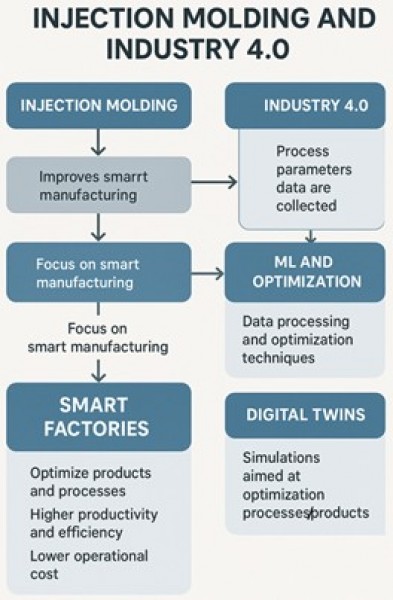
The Injection Molding industry nowadays focuses on manufacturing of plastic products/components characterized by good quality while limiting the production cost. This is achieved by employing the smart manufacturing towards a digitalization concept (e.g Injection 4.0 as a part of Industry 4.0). More specifically, process parameters data are collected using Internet of Things (IoT). Briefly described, IoT is a network comprising sensors and relevant software for collecting and exchanging data over the internet. This data can be processed using Machine Learning (ML) and optimization techniques so that Injection Molding process parameters are refined at the end of the optimization process chain. All the above are part of the Industry 4.0 or fourth generation industry.
The goals of Industry 4.0 are the following:
- Smart factories that optimize their products and processes
- Higher productivity and efficiency
- Lower operational cost
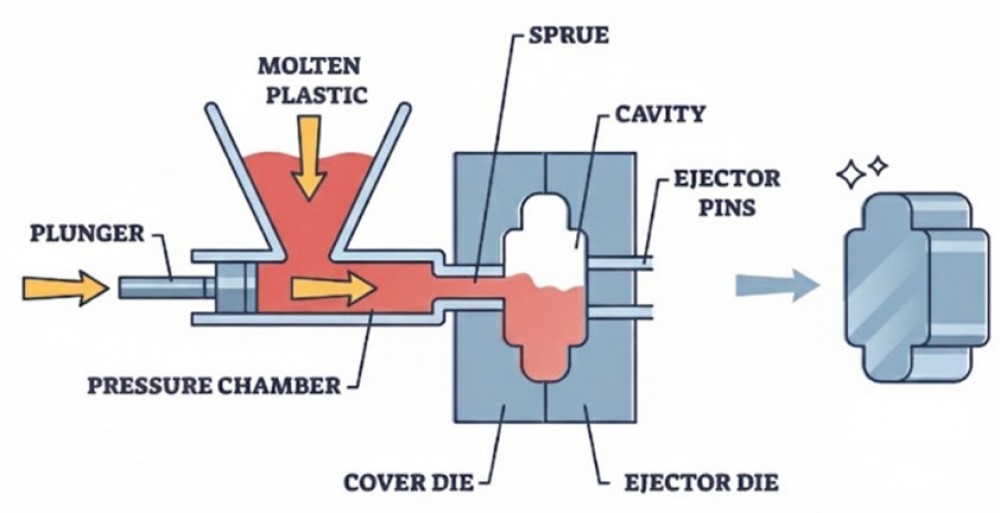
An interesting example of Industry 4.0 in actions is the usage of Digital Twins that consist of machine copies or factories intended for simulations. These simulations replicate the manufacturing processes -e.g Injection Molding-, with ultimate target the optimization of the entire manufacturing process and the products.
Dr. Andreas Gregoriou
Research Engineer